Understanding E = mc² and the Physics Behind Mass and Energy
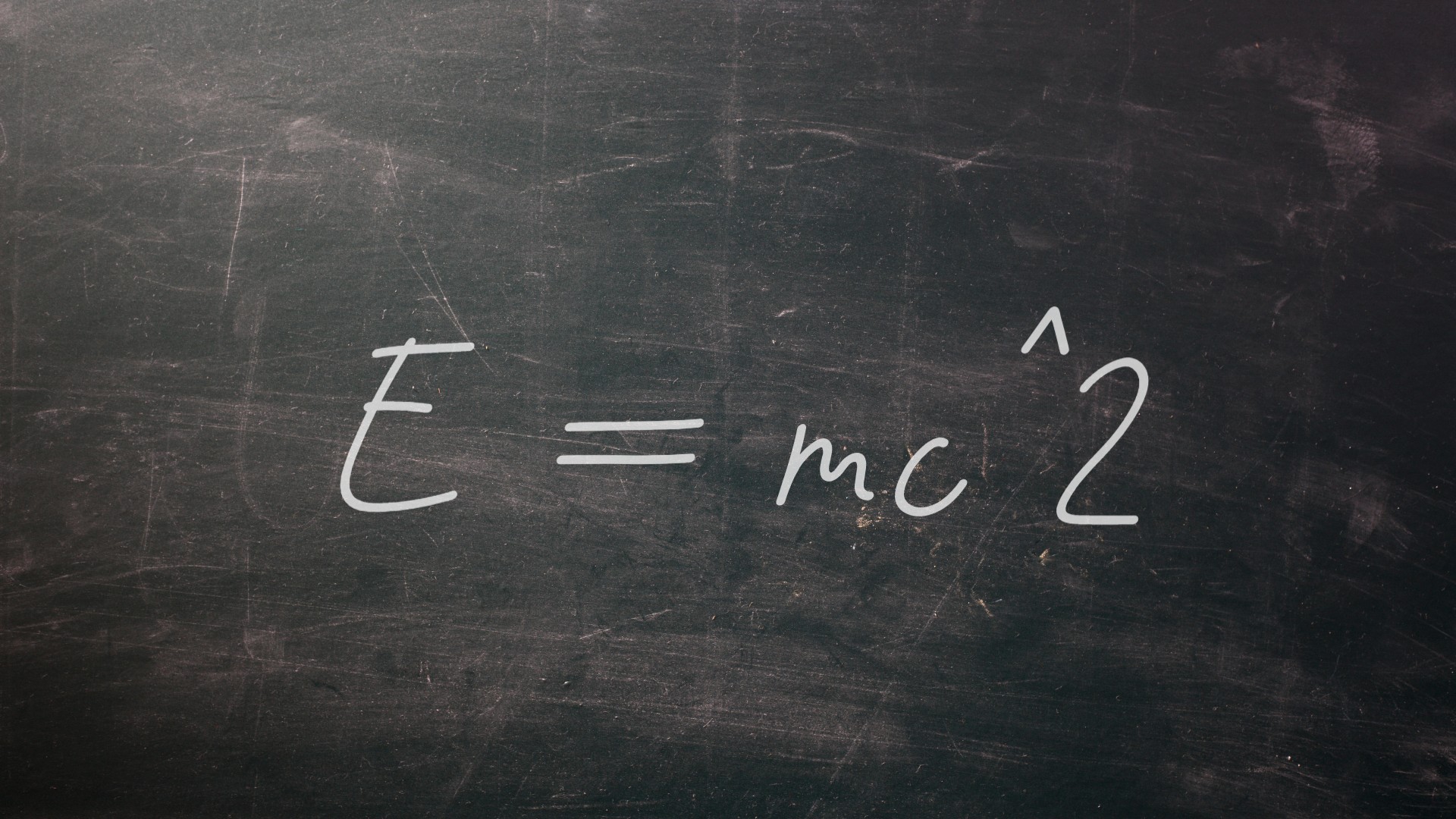
Einstein’s equation E = mc² has become both a cultural icon and a scientific landmark. It is often used in popular media as a symbol of complex physics, yet its true significance lies in its revolutionary statement that mass and energy are fundamentally the same kind of physical quantity. The article explains that this equivalence reveals the enormous amount of energy contained in ordinary matter and that this insight underpins technologies such as nuclear reactors and space power systems. misunderstanding arises because the equation is frequently presented without the scientific context that determines how such energy is actually released, especially in conversations about nuclear power or nuclear weapons.
A widespread misunderstanding is the idea that mass simply turns into energy, as if matter disappears and reappears in another form. This view seems natural to many people, especially when they hear that nuclear weapons release huge amounts of energy from very small amounts of material. However, the article makes clear that Einstein did not claim that mass is destroyed. Instead, any change in mass corresponds to a change in energy. Nuclear reactions do not eliminate matter. They rearrange it into new structures that have different binding energies. The small decrease in mass that appears during nuclear fission is not lost. It shows up as released energy.
The article corrects this misunderstanding by explaining the mass defect and binding energy. When a heavy atomic nucleus splits, the total mass of the resulting fragments is slightly lower than the mass of the original nucleus. This is because the new arrangement has a lower binding energy. The difference in mass appears as energy, consistent with E = mc². The article also explains that other misunderstandings, such as the belief that photons cannot have energy because they have no mass, are resolved with the full relativistic equation E² = p²c² + m²c⁴. For a photon, the equation becomes E = pc. This shows that photons carry energy through their momentum, even though their mass is zero. Experiments in particle physics confirm this relationship.
Understanding these principles clarifies why nuclear reactions release so much energy and why photons carry energy despite having no mass. Mass defect, binding energy, and the relativistic energy momentum equation work together to give a correct picture of energy in modern physics. Clearing up misunderstandings prevents oversimplified claims about mass turning into energy and instead highlights the precise physical mechanisms that explain nuclear processes and the behaviour of light. As the article suggests, the power of E = mc² is found not in the idea that matter disappears, but in the recognition that mass and energy are two expressions of the same underlying reality.